
Applying Calculus in Intelligence Calculations
(The Question of a Coup)
Coups in Africa
Let's examine some well-documented coups in Africa where post-event investigations, memoirs, and expert analyses exactly show the slow-burn patterns of coups:
Elite whispers
Performative loyalty
Silence from insiders, and
Danger being misjudged rather than unseen.
Here are specific, widely studied cases, with the pattern made explicit:
Not arranged in any particular order:
















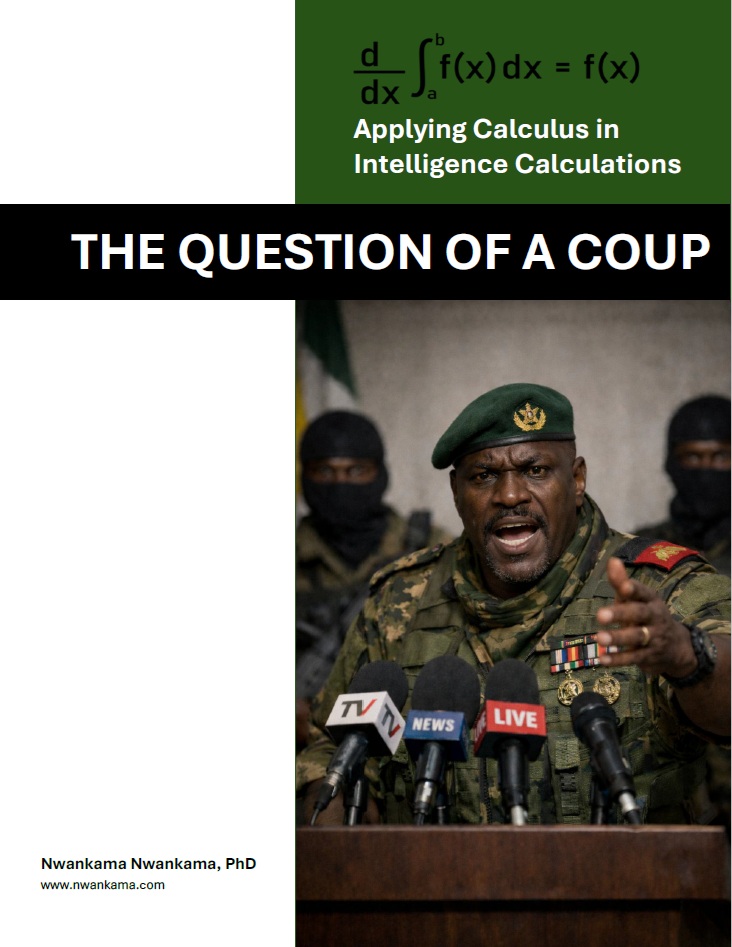
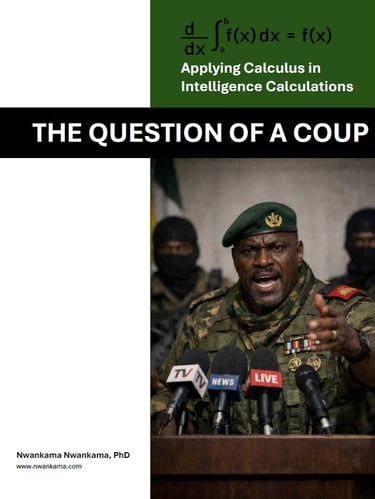
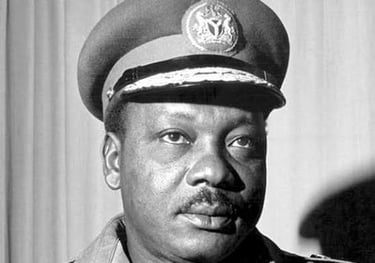
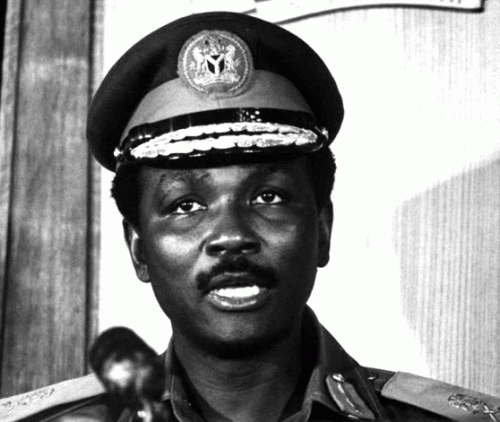
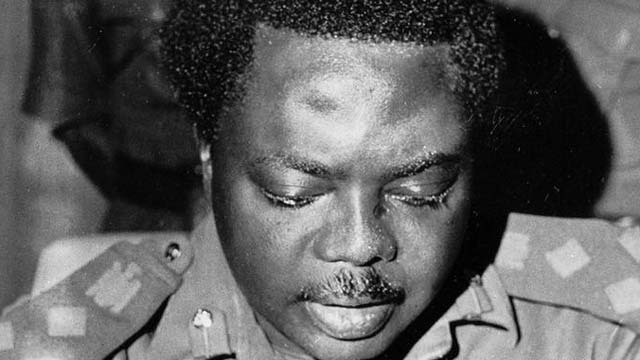
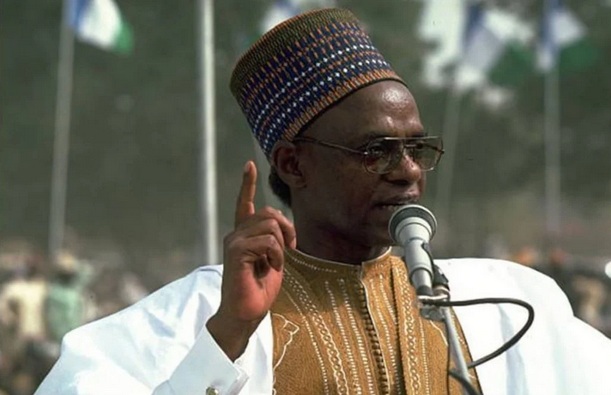
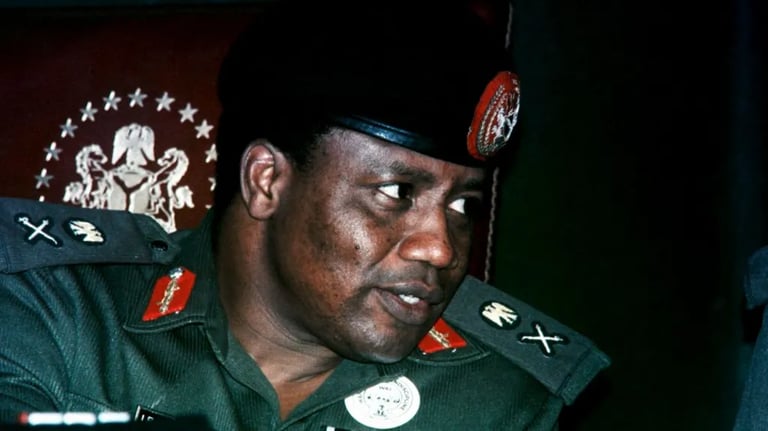
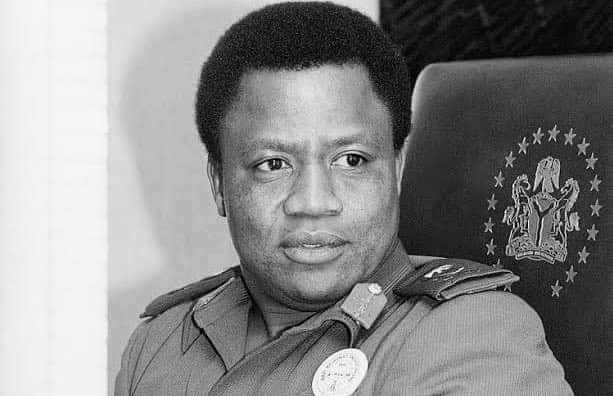
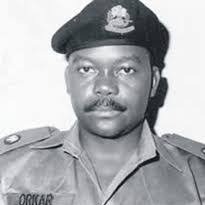
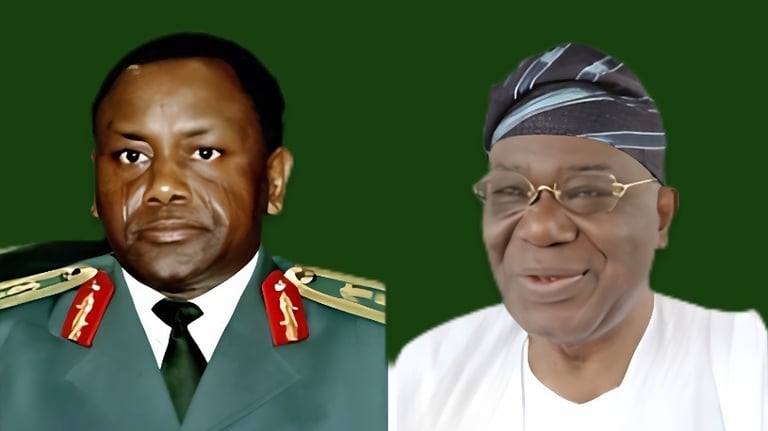
AI-generated image. The image of the military officer is for illustrative purposes only and does not represent any real person or country.



NIGERIA COUPS
Type III: Intelligence Saturation Coup
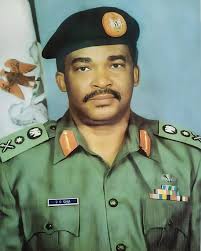
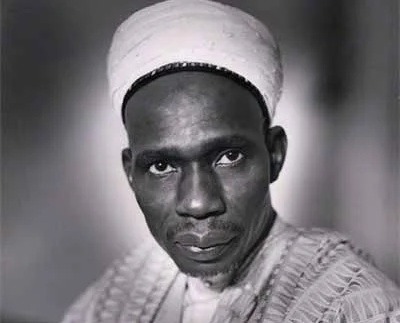
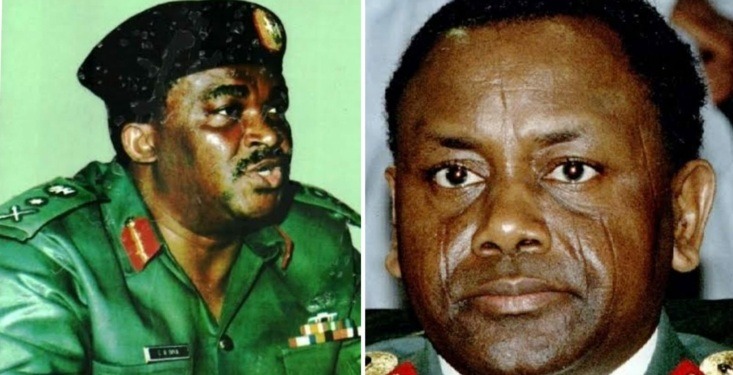
March 1995 (The alleged plot to overthrow General Sani Abacha)
Risk Domain: Signal Saturation Environment
The alleged coup plot
In March 1995, the regime of General Sani Abacha announced it had uncovered a coup conspiracy allegedly involving former senior officers and political figures; arrests were made, and military tribunals imposed severe sentences, halting the supposed plot before any troop movements occurred.
The coup mechanisms:
Authorities alleged a small circle of senior officers coordinated a plan to detain the head of state and assume control.
The supposed design focused on seizing a few decisive command and security nodes rather than broad force deployment.
The plan’s feasibility, if real, would have depended on secrecy until the moment of elite-level action.
How “Signal saturation environment” played out
("Failure mode" renamed here to "Risk domain", being "Signal saturation environment" to avoid confusion, since the alleged coup was uncovered by intelligence)
Nigeria’s political climate already contained persistent coup rumors and factional suspicion.
Intelligence streams reportedly included fragments, claims, and counter-claims rather than a single decisive proof line.
In such conditions, distinguishing an actual conspiracy from intra-elite rivalry or misinformation is inherently difficult.
Key veto/force nodes
State Security Service and military intelligence fusion (signal aggregation + attribution)
Detention infrastructure capable of simultaneous arrests of alleged conspirators
Narrative control mechanisms (official announcements shaping officer corps expectations).
Read more about key veto/force nodes and the coup indicators and diagnostic grid for today's intelligence analysts.
What the leader (Abacha) likely believed
That latent opposition networks existed inside and outside the military and required preemptive disruption.
That decisive punitive action would freeze coordination among potential plotters.
What was actually happening
The decisive contest unfolded entirely in the informational domain: whoever defined the credibility of the threat controlled the outcome.
By acting before any kinetic phase, the regime ensured no rival command structure could materialize or test loyalty across units.
Clarification of the “Signal saturation environment” analytic label
This case is contested historically, so the typology classification reflects information structure, not a deterministic-level judgment on whether the plot was genuine.
What the category means here:
A Signal Saturation Environment exists when many warning signals circulate but vary widely in credibility.
Decision-makers must act before certainty is possible.
Both realities can coexist analytically:
There may have been a real conspiracy disrupted early, or
Authorities may have interpreted ambiguous signals as a conspiracy and acted preemptively.
Why the alleged Diya and co. coup fits Type III Coup analytically
The defining feature of a Type III coup is not whether the plot existed, but that power hinged on who controlled threat interpretation.
In March 1995:
The Abacha regime controlled classification authority,
Acted before any kinetic phase,
And thereby ensured no rival command alignment could be tested.
Typology consistency rule (applies to both 1986 (the alleged Vasta coup) and 1995 cases)
Type III identifies the risk environment, not the outcome.
A Signal Saturation Environment means:
The system contains many warnings,
But their credibility is hard to rank.
In such environments, two opposite errors are possible:
False negative: dismiss a real plot as noise → coup succeeds.
False positive: act on ambiguous signals → purge or crackdown.
In 1995, the Abacha regime apparently acted early, meaning the decisive variable was:
The state successfully set the detection threshold low enough to act before the kinetic phase.
So analytically:
The risk condition existed (signal saturation),
But the decision response succeeded (preemption).
Integration rule for coup typology
Type III cases are defined by informational conditions of decision-making under uncertainty, not by the factual status of the alleged plot.
Calculus insight
Preemption asymmetry:
If one actor monopolizes threat classification authority, it can terminate a coup in the probability space before it exists in physical space.
A calculus-based synthesis of Nigerian coups
Across all six types of military coups in Nigeria, the shared mistake is the same: leaders treat political danger as a still photograph when it is actually a moving video. In doing so, they take momentary snapshots instead of engaging in sustained and sophisticated trend analysis.
Coups do not erupt because intelligence is missing. They erupt because leaders look at where things are instead of where things are going—and how fast.
This is where calculus-based thinking quietly matters.
1. Derivatives: Rates of Change, Not Levels
Calculus idea:
The derivative measures how fast something is changing—public opinion, voting numbers, economic hardship, public safety concerns, grumblings within the military, or policy approval, not how big it is.
Why it matters for coups:
Leaders often track levels—approval ratings, number of protests, and who is protesting, loyalty statements, etc. Coups tend to follow accelerations, which are measurable mathematically.
Applied insight:
A military that is “mostly loyal” but losing loyalty quickly is more dangerous than one that is stably skeptical.
A quiet elite whose resentment is accelerating is more dangerous than a noisy but static opposition.
Intelligence failure this corrects:
Mistaking “things still look okay” for “things are stable.”
2. Second Derivatives: Acceleration and Stored Instability
Calculus idea:
The second derivative captures acceleration—how fast the rate of change itself is changing.
Why it matters for coups:
Silence, discipline, or calm can coexist with rapidly increasing internal pressure.
Applied insight:
Fewer complaints + rising removals + tighter control may indicate accelerating elite exit.
Stability can be a pre-coup compression phase.
Intelligence failure this corrects:
Treating calm as equilibrium instead of as energy that is being stored for the "D-Day."
3. Thresholds and Discontinuities
Calculus idea:
Systems can behave smoothly until they hit a critical threshold, after which behavior changes abruptly.
Why it matters for coups:
Coups are not linear events. Below a threshold, nothing happens; above it, everything happens at once.
Applied insight:
Legitimacy does not need to hit zero—only a minimum viable level.
Loyalty does not need to collapse everywhere—only at the final veto node.
Intelligence failure this corrects:
Assuming tomorrow will look like today because today looks like yesterday.
4. Integration: Accumulated Pressure Over Time
Calculus idea:
Integration sums small changes over time into a total effect.
Why it matters for coups:
Grievances, rumors, slights, and mistrust compound even when each instance seems minor.
Applied insight:
Repeated “low-confidence” warnings can add up to a high-confidence risk.
Time itself is a variable; prolonged inaction increases cumulative danger.
Intelligence failure this corrects:
Evaluating warnings individually instead of as an accumulated trajectory.
5. Boundary Conditions and Constraints
Calculus idea:
A system’s behavior is constrained by boundary conditions, regardless of internal dynamics.
Why it matters for coups:
Formal authority operates within limits set by who controls force, access, and enforcement.
Applied insight:
Civilian rule inside a military-controlled boundary will revert under stress.
Elections cannot stabilize a system whose coercive boundaries are unchanged.
Intelligence failure this corrects:
Overestimating formal changes while ignoring structural constraints.
6. Multipliers: When One Variable Nullifies Another
Calculus-adjacent idea:
In many models, variables multiply rather than add.
Why it matters for coups:
Some factors act as zero-multipliers.
Applied insight:
Intelligence × enforcement capacity = deterrence.
If enforcement capacity is zero, intelligence—however perfect—has no effect.
Intelligence failure this corrects:
Believing that awareness alone changes outcomes.
The Core Insight
Most coups succeed not because leaders knew nothing,
but because they misunderstood movement.
They read levels:
“Is loyalty high?”
“Is the army calm?”
“Is the state functioning?”
When they needed to read curves:
“Is loyalty shrinking faster than before?”
“Is calm masking coordination?”
“Is the system approaching a tipping point?”
This is why people trained to think in dynamics—engineers, analysts, systems thinkers, mathematicians—often spot danger earlier than politicians.
They are not smarter about politics.
They are simply trained to ask a different kind of question:
“What happens next if this trend continues?”
And that, more than ideology or intent, is what decides whether a coup fails—or succeeds.


Common Patterns in the Coups
Other Countries
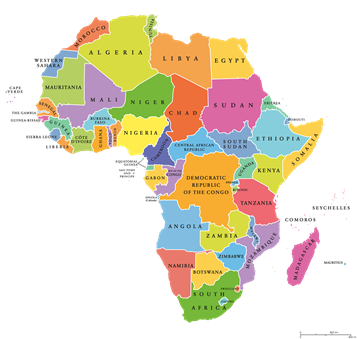
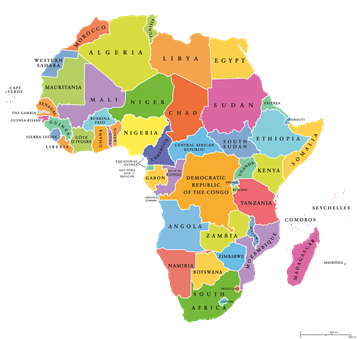
Across these cases, experts consistently identify the same sequence:
Elite discontent becomes private, not public
Rituals of loyalty continue, but substance disappears
Advisers hedge, delay, or fall silent
Leaders mistake formality for fidelity
The coup appears sudden—only in retrospect
One day, an administration stands;
The next, it is gone!
This is why many coup experts argue that coups are not shocks but revelations: the moment when invisible shifts finally become undeniable.
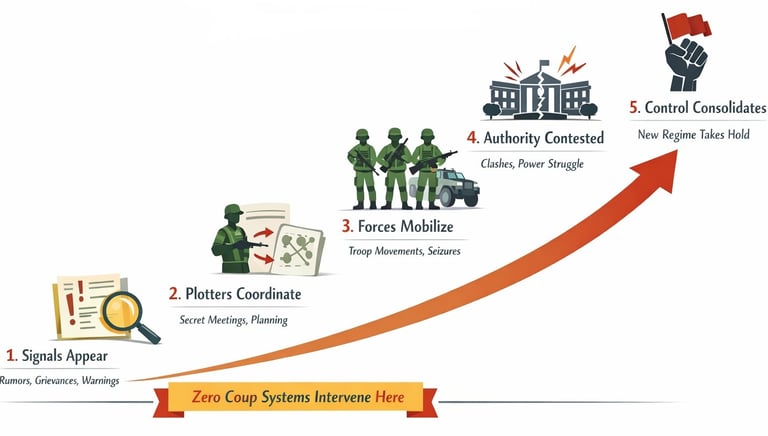
The Coups Trajectory
The Coup Pathway
Signals appear
Plotters coordinate
Forces mobilize (red zone A)
Authority is contested (red zone B)
Control consolidates (red zone C)
Zero Coup systems intervene at stages 1 or 2—never waiting for stage 3 (the red zones).
About the tool book
This free introductory manual starts where conventional intelligence analysis grows uncomfortable—and grinds to a screeching halt—and that is, sophisticated mathematics. No one likes maths, but it's maths that saves the day, every day. This manual takes a turn most intelligence analysts never expect: Calculus. This is not just equations; it's not academic maths, but a discipline designed to reason under uncertainty, thresholds, and hidden coordination.
Yes, many intelligence failures are driven less by missing information and more by a false sense of certainty.
Calculus accounts for what you do not know! In this case, calculus may be the missing tool leaders never realized they needed.
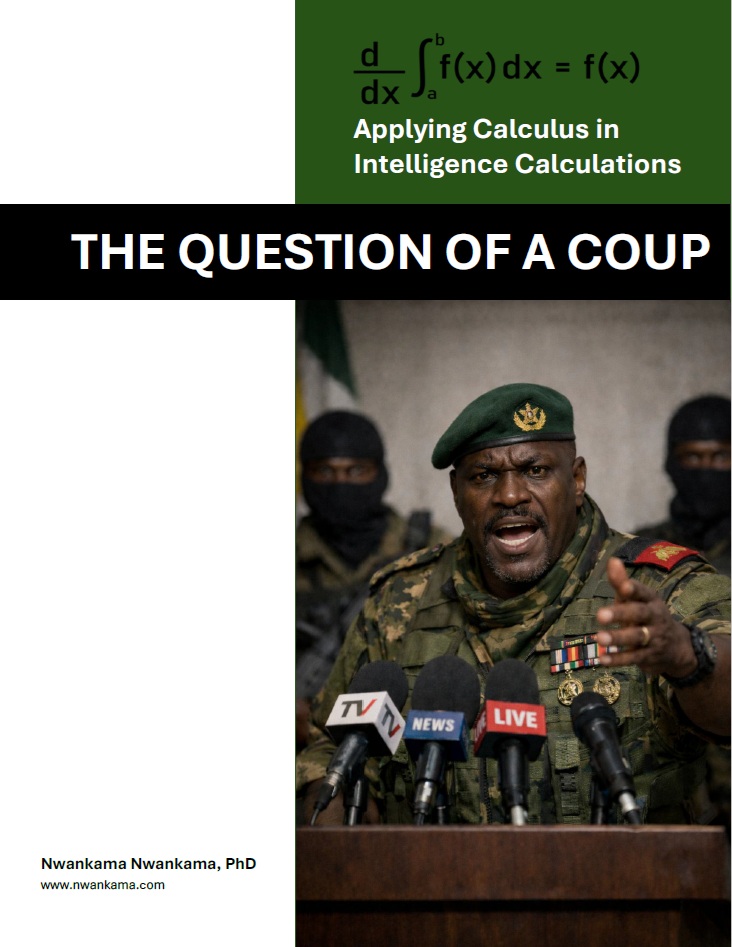
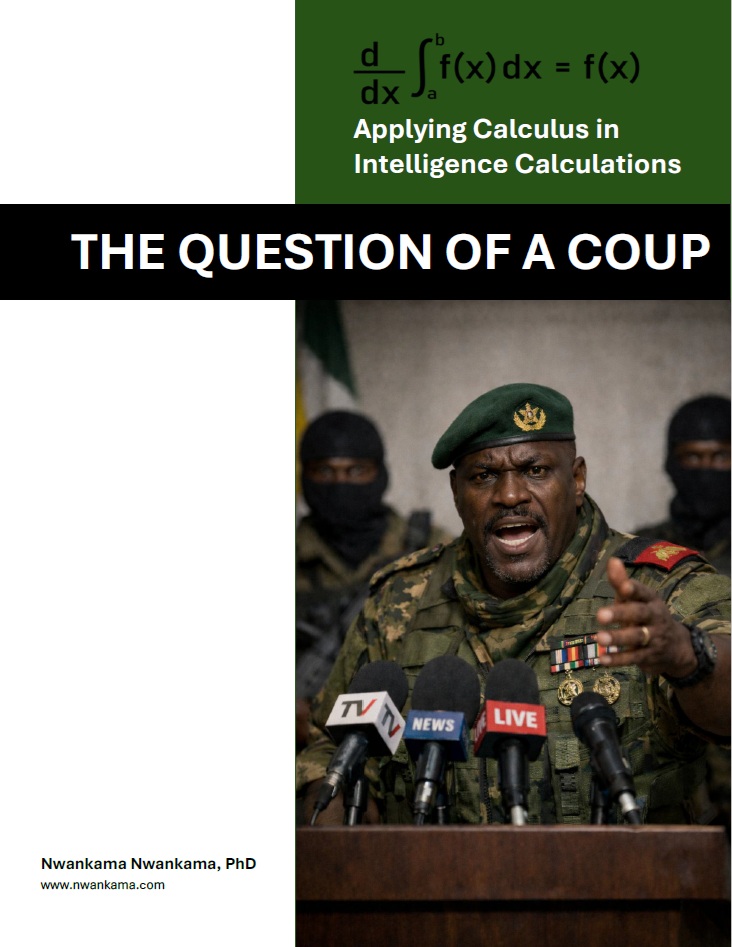
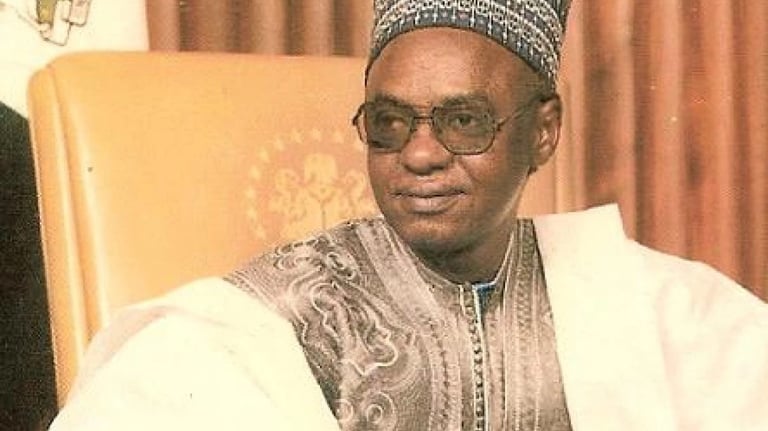
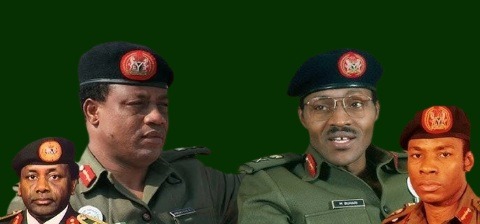
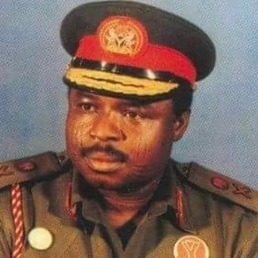
AI-generated image. The image of the military officer is for illustrative purposes only and does not represent any real person or country.
What intelligence analysts will get from this manual:
A disciplined way to treat coup risk as a continuously evolving process rather than a binary outcome.
A method for preventing repeated signals from masquerading as independent confirmation.
Practical tools for integrating noisy, incomplete, and deceptive intelligence without forcing premature conclusions.
A calculus-based framework for handling hidden coordination, thresholds, and nonlinear escalation.
Protection against false certainty created by consensus, narrative dominance, or analytic momentum.
Clear guidance on when confidence is warranted, conditional, or unjustified.
An approach that strengthens judgment without replacing experience or tradecraft.
Techniques for briefing senior leaders that explain not just what you assess, but why that level of confidence exists.
Earlier warning without alarmism, even when visible indicators remain weak.
A way to stay analytically ahead of surprise rather than explaining it afterward.
Explore our other recent projects:
The Question of a Coup: Applying Calculus in Intelligence Calculations: A practical intelligence manual showing how calculus-based reasoning can prevent false certainty, expose hidden coordination, and reduce strategic surprise in coup analysis.
National socio-digital early warning and strategic foresight architecture: a computational intelligence ecosystem to anticipate mass sentiment shifts before coordinated unrest and destabilization emerge.
Understanding the Lockwood Analytical Method for Prediction (LAMP): my firsthand experience applying one of the intelligence community’s most rigorous forecasting methodologies.
Self-disruption research: Applied Whitney Johnson's four principles of self-disruption in addressing unconscious bias among intelligence analysts.
Intelligence training manual: Self-disruption as analytic tradecraft
Self-disruption as analytic tradecraft: Classified-style analytic vignettes and tradecraft alignment
Not Intelligence-Related:
Get in touch
Nwankama Nwankama
Email is best (or, you can fill out the Contact form)
nwankama@nwankama.com


Home | About Me | Projects | Blog | Social Media | Contact Us