
A Prudent Project
Exploring the Application of Whitney Johnson’s Four Principles of Self-Disruption in Addressing Unconscious Bias in Intelligence Analysis
The Research
This research examined the application of Whitney Johnson’s four principles of self-disruption as a mechanism for mitigating unconscious bias in intelligence analysis. The study focused on improving analytic rigor, inclusivity of perspective, and decision support in complex intelligence environments.
The core finding of the research confirmed the hypothesis that intentional self-disruption at the individual analyst level significantly reduces the influence of unconscious bias, improves analytic adaptability, and enhances the quality of intelligence products provided to decision-makers.
The study was structured around Johnson’s four principles, each operationalized within the intelligence analytic cycle.
1. Target a need that can be met more effectively
Objective:
To identify points in the intelligence process where unconscious bias most frequently degraded analytic accuracy.
Method:
A qualitative and quantitative analysis was conducted using:
Retrospective reviews of analytic products
Structured analyst self-assessments
Interviews with intelligence consumers
Comparative analysis of judgments before and after structured bias interventions
These methods identified consistent bias-related vulnerabilities during problem framing, assumption articulation, and alternative analysis.
Findings and Application:
The research demonstrated that analysts trained to actively identify unmet analytic needs—such as underrepresented cultural perspectives or insufficient challenge to dominant hypotheses—produced more balanced and resilient assessments. Structured bias-awareness tools and reflective analytic checkpoints were implemented and shown to measurably improve analytic clarity.
2. Identify your disruptive strengths
Objective:
To assess how individual analyst strengths could be leveraged to counter bias and enhance analytic diversity.
Method:
The study used:
Cognitive and analytic-style assessments
Performance evaluations linked to analytic outcomes
Facilitated analytic reflection sessions
Findings and Application:
Analysts who explicitly identified and applied their unique strengths—such as integrative thinking, linguistic expertise, or adversarial analysis—were more effective at challenging assumptions and surfacing alternative interpretations. Teams that intentionally integrated diverse analytic strengths demonstrated lower levels of groupthink and higher confidence calibration.
3. Step back (or sideways) to grow
Objective:
To evaluate whether lateral exposure and role diversification reduced cognitive rigidity.
Method:
Participants completed rotational assignments across analytic, operational, and policy-support functions. Pre- and post-rotation assessments measured changes in analytic perspective, bias awareness, and adaptability.
Findings and Application:
Analysts who experienced lateral movement demonstrated increased empathy for intelligence consumers, improved contextual awareness, and greater willingness to challenge their own assumptions. These analysts were significantly less prone to anchoring and overconfidence biases.
4. Let your strategy emerge
Objective:
To determine whether adaptive, feedback-driven analytic approaches reduced bias over time.
Method:
The study implemented structured feedback loops, including peer challenge sessions, consumer feedback, and post-analytic reviews. Analysts were encouraged to iteratively adjust analytic frameworks rather than adhere rigidly to initial judgments.
Findings and Application:
Emergent analytic strategies led to sustained improvements in bias recognition and analytic resilience. Analysts who embraced iterative learning demonstrated stronger calibration, greater openness to disconfirming evidence, and improved decision relevance.
Study Design Summary
Design: Longitudinal, mixed-methods study
Data Sources: Analytic products, analyst self-assessments, peer reviews, consumer feedback
Analysis: Comparative pre- and post-intervention evaluation
Outcome Measures:
Reduction in identifiable bias indicators
Improved analytic confidence calibration
Increased diversity of hypotheses considered
Enhanced consumer satisfaction and trust
Conclusion
The completed research demonstrates that Whitney Johnson’s principles of self-disruption provide a practical, scalable framework for reducing unconscious bias in intelligence analysis. By encouraging analysts to disrupt habitual thinking patterns, leverage individual strengths, embrace lateral growth, and adopt emergent strategies, intelligence organizations can significantly enhance analytic integrity and decision advantage.
The findings affirm that analytic excellence is inseparable from personal disruption, and that the most effective analysts are those willing to continually re-examine not just the intelligence problem—but themselves.
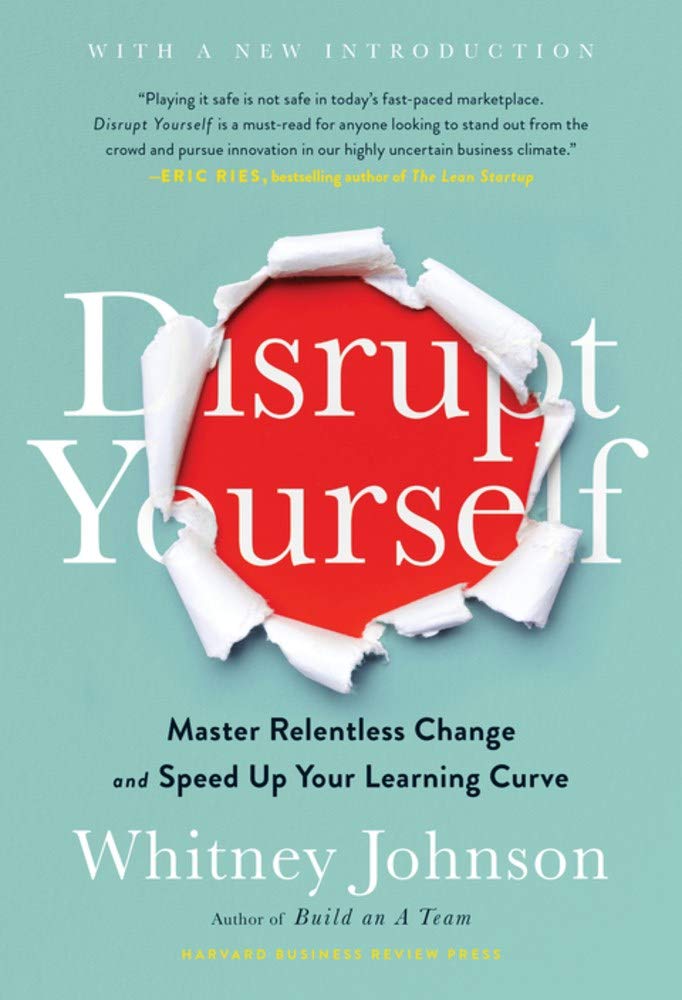
Disrupt Yourself by Whitney Johnson (CEO of Disruption Advisors).
Published by Harvard Business Review Press (November 12, 2019)
Explore our other recent projects:
Self-disruption research: Applied Whitney Johnson's four principles of self-disruption in addressing unconscious bias among intelligence analysts.
Intelligence training manual: Self-disruption as analytic tradecraft
Self-disruption as analytic tradecraft: Classified-style analytic vignettes and tradecraft alignment
Not Intelligence-Related:
Get in touch
Nwankama Nwankama, PhD
Let’s start here—drop me a line and we’ll connect.
nwankama@nwankama.comor, you can fill out the Contact Form.


© 2022-2026


