
Nwankama Nwankama
PhD | Intelligence | Analytics
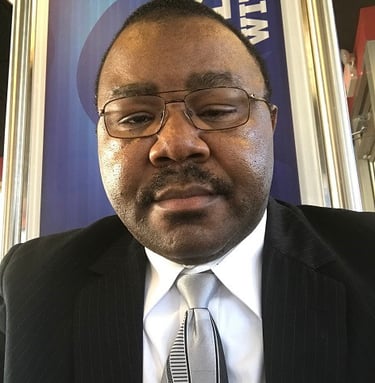
In a nutshell
I come from a background in intelligence and strategy analysis, grounded in formal training in architecture and engineering, IT, and organizational leadership, and expanded through self-directed study of cognitive neuroscience, psychology, advanced calculus, statistics, and AI.
Together, these disciplines reflect my long-standing effort to understand, model, and predict human behavior across complex organizational and strategic systems.
A pivotal moment in my professional development came during my master’s studies in Competitive Intelligence and Analytics at American Military University, where I studied under Col. Jonathan S. Lockwood, PhD (U.S. Army, Ret.), creator of the Lockwood Analytical Method for Prediction (LAMP).
Under Col. Lockwood's supervision, my earlier work on psychology, security, and organizational behavior was transformed into structured intelligence tradecraft, firmly grounded in real-world organizational and national security practice.
That trajectory began way back at the School of Architecture in the 1990s at McGill University, Montreal, Canada. There, my research on the use of outdoor spaces in designed spaces revealed that human interaction, rather than the elegance of physical structures, ultimately determined success. In the 2000s, now in the US, this inquiry expanded into information security and insider-threat research, producing insights that later became integral to my formal intelligence education.
Over time, I unified these strands into an applied analytical framework that integrates neuroscience, quantitative reasoning (mainly, calculus), and probabilistic reasoning (mainly Bayesian analysis), along with AI to anticipate human actions, decision-making patterns, and emergent behavior in organizational and strategic contexts.
My focus
I hate how implicit biases, or prejudgments of people or events, obscure analytical reasoning. It's cancerous effects are even worse when analysts fall into this trap of human weakness.
Bias doesn’t just poison reason and distort decisions—it destroys rational judgment, especially inside complex organizations and societies. That reality is exactly why my work sits at the intersection of data, human behavior, and institutional systems—where bias is most entrenched, most invisible, and most dangerous.
I apply data-driven insights, predictive modeling, and disciplined reasoning specifically to strip out implicit bias, enabling leaders and institutions to navigate complexity, anticipate risk, and secure long-term stability and growth.
The blessings of my multiple disciplines
My academic foundation spans multiple disciplines. As I mentioned above, I previously completed master’s degrees in architecture and engineering at McGill University in Montreal, following earlier graduate studies at the University of Nigeria. I later earned an additional master’s degree in information technology from American Military University, with a focus on computer and intelligence systems, and completed a doctorate and specialized in Organizational Leadership and Change Management at Virginia University of Lynchburg.
It's been tough doing all that I do, but it gives me a broad horizon and allows me to connect several areas of expertise.
Beyond the classroom
Beyond formal education, I have pursued continuous professional development through executive and analytics programs with institutions such as the American College, Harvard Business School, and Stanford Graduate School of Business. My professional affiliations have included the American Academy of Management (Executive Member, where I reviewed scholarly articles), the Institute of Electrical and Electronics Engineers (IEEE)'s Computational Intelligence Society (New York), and the Harvard Business Review Advisory Council.
What it all means
My work centers on producing actionable intelligence by integrating scientific, behavioral, and technological analytic methods to help organizations and leaders make sound decisions in both high-pressure and routine environments.
Discover how my over 30 years of experience spanning multiple disciplines and intelligence management strengthens resilience, unifies multiple disciplines, and delivers a decisive, systems-driven approach to understanding and shaping complex environments.
These projects exemplify our approach to advanced intelligence analysis and strategic foresight:
The Question of a Coup: Applying Calculus in Intelligence Calculations
.National Socio-Digital Early Warning and Strategic Foresight Architecture
.Understanding the Lockwood Analytical Method for Prediction (LAMP)
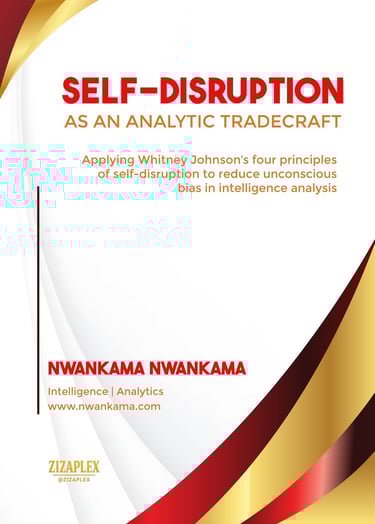
.Intelligence Training Manual: Self-Disruption as Analytic Tradecraft
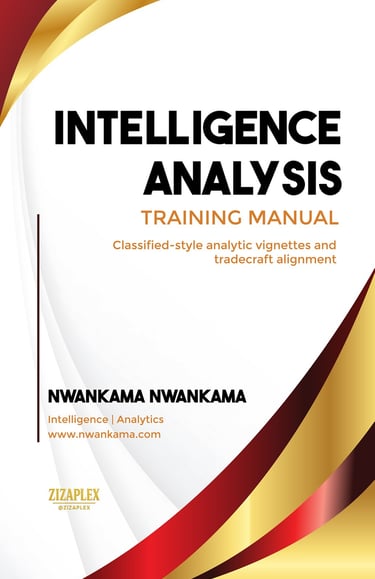
.Classified-Style Analytic Vignettes and Tradecraft Alignment
More Information:
My projects (most of which are collaborative) use data and computer-assisted analysis to understand complex systems and new trends that affect organizations and society. My work helps identify risks, disruptions, and opportunities so organizational and public leaders can make better decisions in high-stakes situations that affect long-term security.
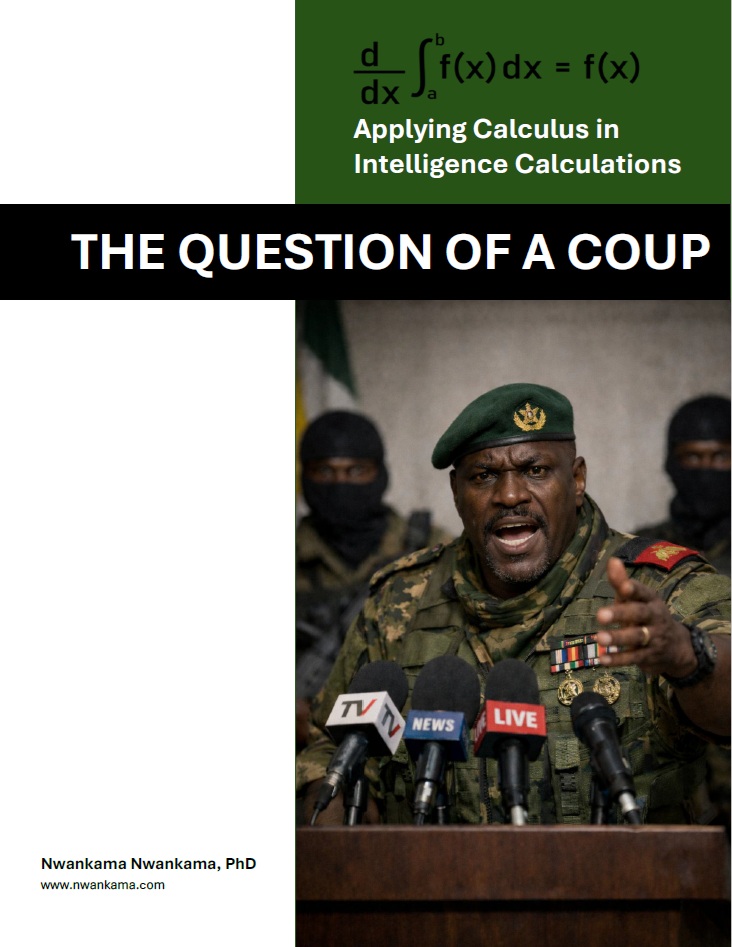
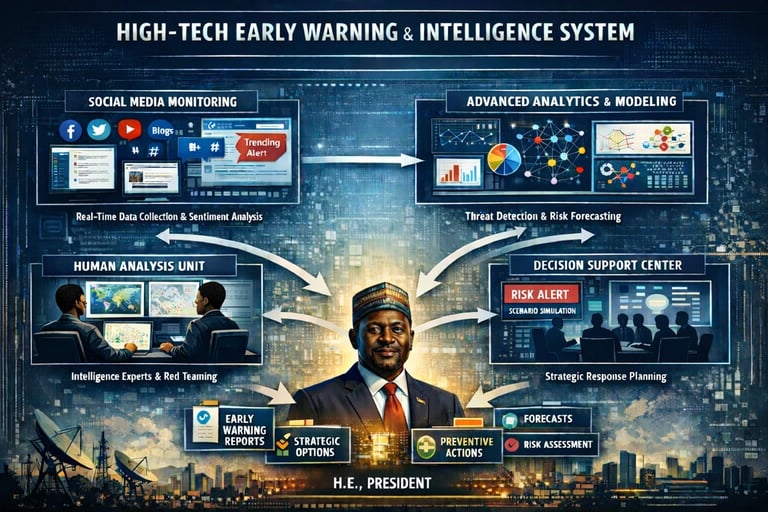
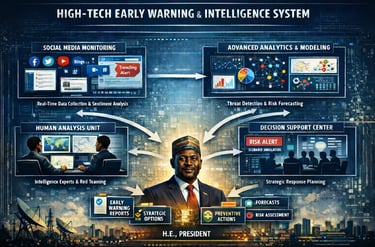
Many of the most dangerous threats to 21st-century governments no longer emerge from military barracks or battlefields, but from computer keyboards and cell phones—where narratives (including false narratives) spread like a wild fire, emotions mobilize, and revolutions take shape before a single soldier moves. The Arab Spring of the early 2010s revealed a fatal blind spot: states could monitor weapons and crowds, but not the narratives, emotions, and cascading belief shifts that ignite unrest. This project responds to that gap by building a computational intelligence ecosystem—a national immune system—designed to detect, model, and prevent instability before it erupts | Go >>


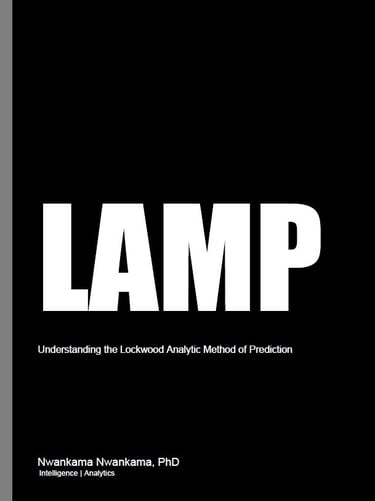
Download this free booklet where I draw on my direct training under LAMP’s creator, Col. Jonathan S. Lockwood, PhD (U.S. Army, Ret.), to explain how this actor-driven intelligence analysis method overcomes the limits of traditional forecasting. I detail not only how LAMP works, but also its practical challenges—especially the explosion of alternate futures—and how I have addressed them through structured workflows, full computer scripts, and automation for generating, filtering, and ranking scenarios. This booklet blends tradecraft, real analytic experience, and modern tools to offer a practical, insider’s guide to producing credible, decision-ready intelligence in complex, high-stakes environments | Go >>
There are many ways we can connect on social media. Let's choose clarity over noise; insight over outrage. No emotions.

























Older blogs (Before 2014)



Minimal activity here
Minimal activity here
Please look me up on WhatsApp
Minimal activity here
Get in touch
Nwankama Nwankama
Email is best (or, you can fill out the Contact form)
nwankama@nwankama.com


Home | About Me | Projects | Blog | Social Media | Contact Us