
Applying Calculus in Intelligence Calculations
(The Question of a Coup)
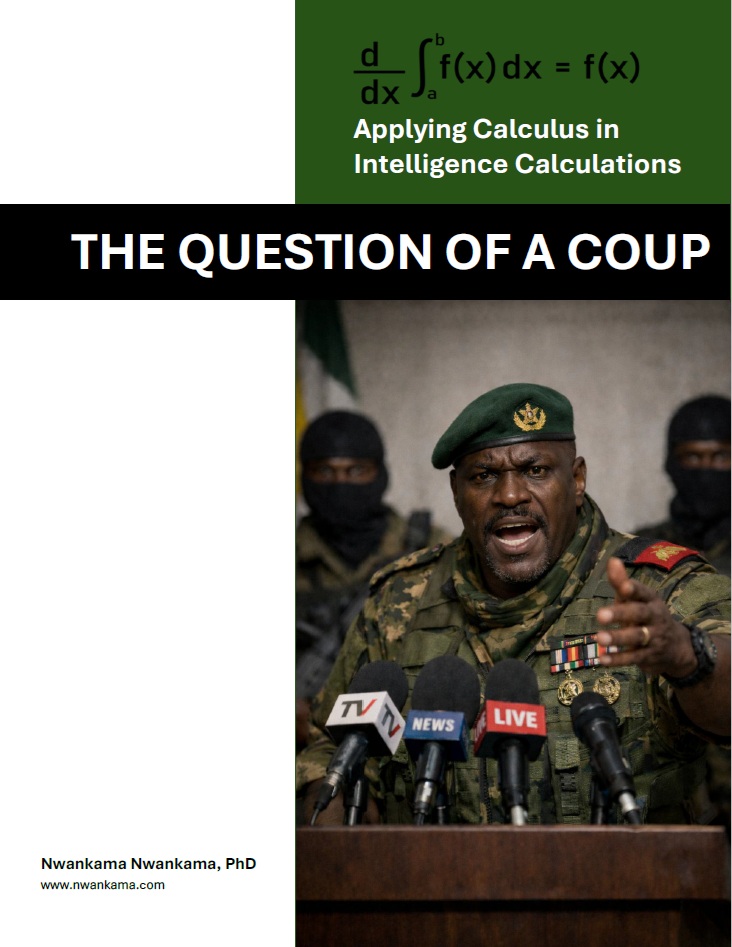
Coups in Africa
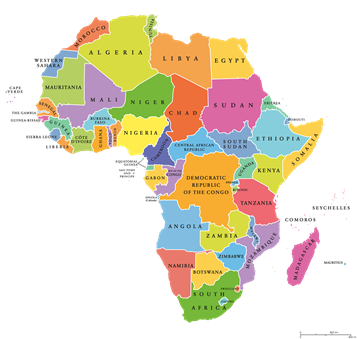
Let's examine some well-documented coups in Africa where post-event investigations, memoirs, and expert analyses exactly show the slow-burn patterns of coups:
Elite whispers
Performative loyalty
Silence from insiders, and
Danger being misjudged rather than unseen.
Here are specific, widely studied cases, with the pattern made explicit:
















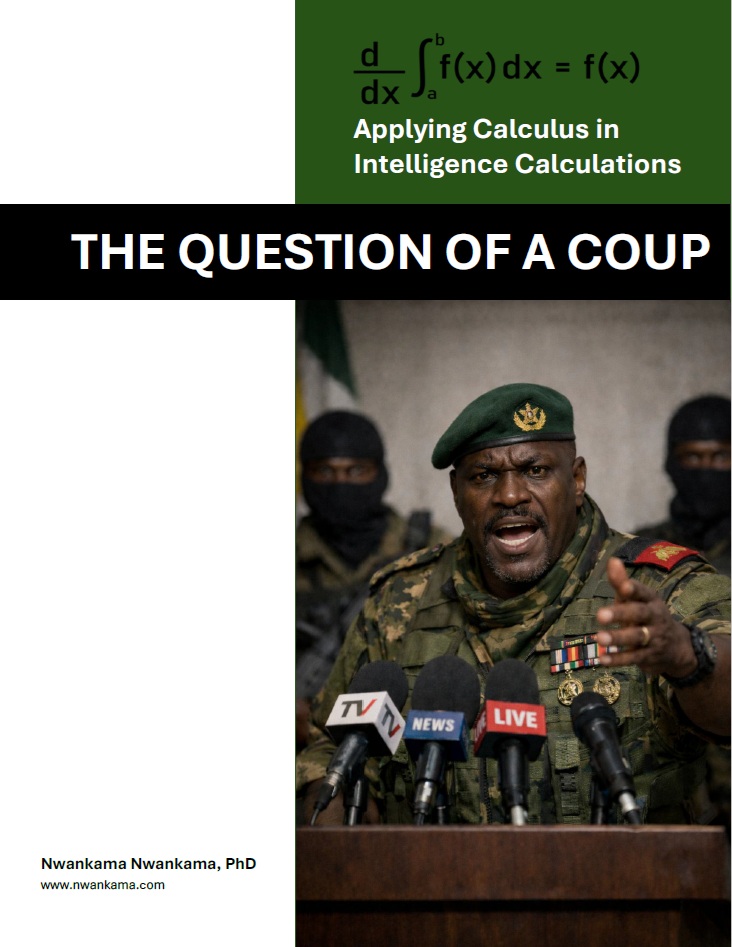
AI-generated image. The image of the military officer is for illustrative purposes only and does not represent any real person or country.
Can the application of advanced mathematical principles help stem coups and support national stability?
ABSOLUTELY!
And, that is Calculus!
Uganda
The 1971 Defensive Coup that Obote Misread
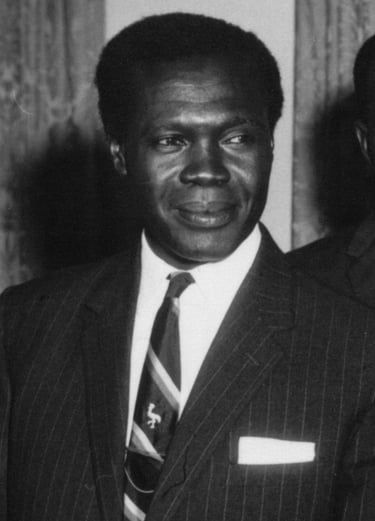
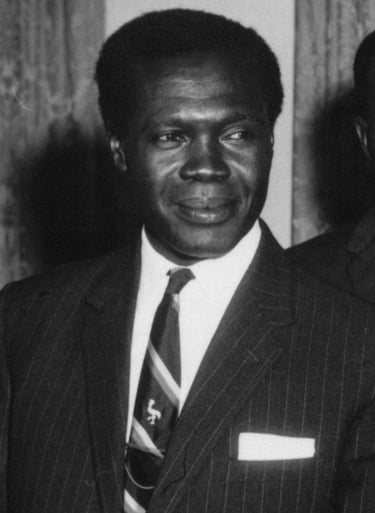
Milton Obote, former president of Uganda
Image credit: JFK Library
The “whispers” and institutional drift: army factionalism + an unraveling chain of command:
Milton Obote and the army (and especially Idi Amin) were already in a deteriorating relationship, with Amin’s position becoming “perilous” months before the coup—including demotion and knowledge of impending arrest for alleged misappropriation.
A U.S. government analysis written right after the takeover described the coup as a hastily improvised, defensive countermove to Obote’s effort to remove Amin.
What this looked like in practice:
Signals of drift were concentrated inside the armed forces: factionalism in the military mirrored broader political fractures, which made Obote’s attempt to “manage” Amin (demotions/reassignments) politically risky.
This is exactly the kind of environment where “elite whispers” matter: not necessarily public rumor, but quiet assessments within officer networks about who can actually command loyalty when orders become politically loaded.
Performative loyalty: obedience theater while loyalty moved:
The key performative element here is structural:
Formal hierarchy said the army answered to Obote;
Informal reality was that Amin had enough loyalty inside the ranks to make an arrest/dismissal attempt dangerous.
That gap between “paper authority” and “real authority” is what enables the loyalty-performance phase.
Insider silence:
“Little preparation” visible to outsiders, even as the internal break was advanced
One reason 1971 can feel sudden is that even attentive observers said they saw little preparation beforehand.
That’s consistent with a pattern where the most important warnings exist inside a narrow circle (key units, key commanders, and their political patrons), and don’t translate into actionable public signals until the moment of execution.
Misjudged danger:
Not “no one saw it,” but “Obote misread what removal would trigger”
The through-line across sources is that Obote recognized Amin as a problem, but the coup still succeeded because the situation was miscalculated: efforts to oust Amin created the immediate trigger for Amin to move first (a “pre-emptive” logic).
Key veto/force nodes, and coup indicators:
Read more about:
Advanced tools for today's intelligence analysts.
Can the application of advanced mathematical principles help stem coups and support national stability?
ABSOLUTELY!
And, that is Calculus!
Common Patterns in the Coups
Other Countries
Across these cases, experts consistently identify the same sequence:
Elite discontent becomes private, not public
Rituals of loyalty continue, but substance disappears
Advisers hedge, delay, or fall silent
Leaders mistake formality for fidelity
The coup appears sudden—only in retrospect
One day, an administration stands;
The next, it is gone!
This is why many coup experts argue that coups are not shocks but revelations: the moment when invisible shifts finally become undeniable.
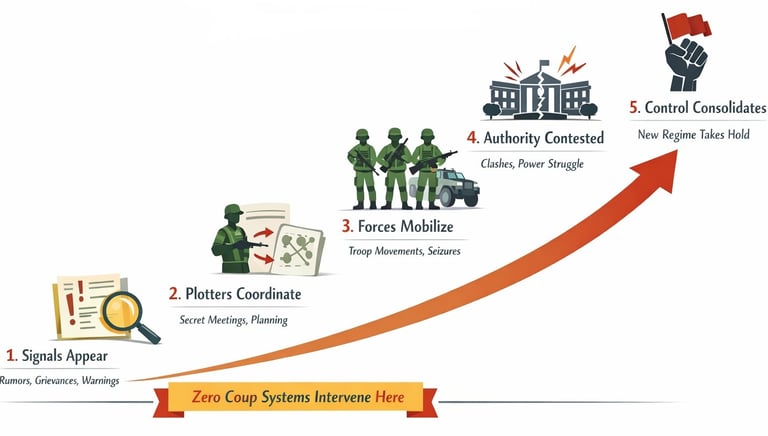
The Coups Trajectory
The Coup Pathway
Signals appear
Plotters coordinate
Forces mobilize (red zone A)
Authority is contested (red zone B)
Control consolidates (red zone C)
Zero Coup systems intervene at stages 1 or 2—never waiting for stage 3 (the red zones).
About the tool book
This free introductory manual starts where conventional intelligence analysis grows uncomfortable—and grinds to a screeching halt—and that is, sophisticated mathematics. No one likes maths, but it's maths that saves the day, every day. This manual takes a turn most intelligence analysts never expect: Calculus. This is not just equations; it's not academic maths, but a discipline designed to reason under uncertainty, thresholds, and hidden coordination.
Yes, many intelligence failures are driven less by missing information and more by a false sense of certainty.
Calculus accounts for what you do not know! In this case, calculus may be the missing tool leaders never realized they needed.
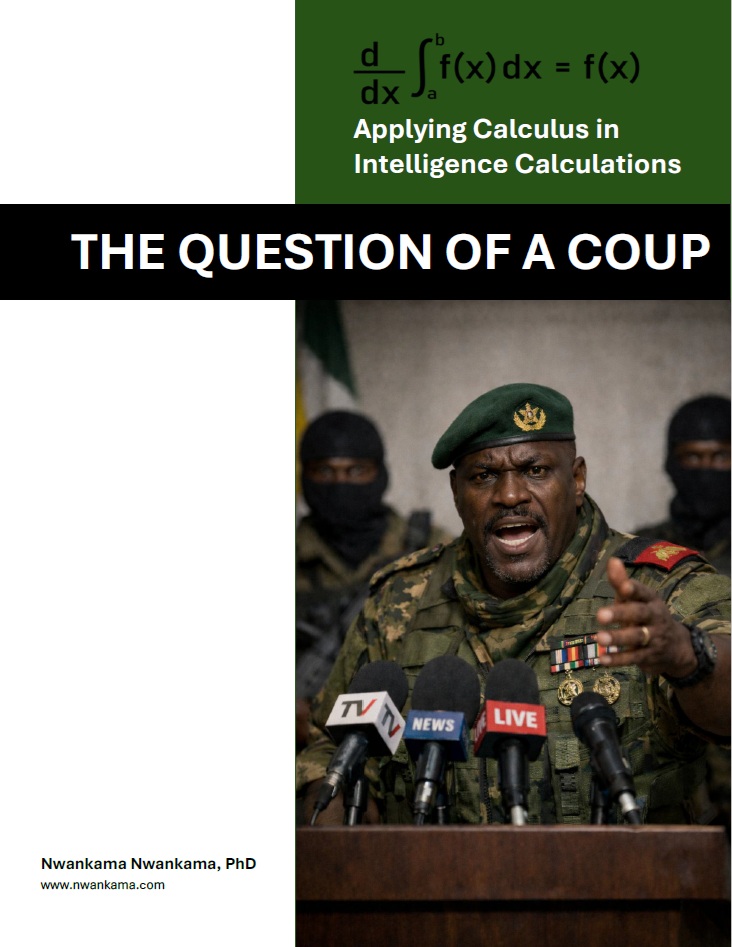
AI-generated image. The image of the military officer is for illustrative purposes only and does not represent any real person or country.
What intelligence analysts will get from this manual:
A disciplined way to treat coup risk as a continuously evolving process rather than a binary outcome.
A method for preventing repeated signals from masquerading as independent confirmation.
Practical tools for integrating noisy, incomplete, and deceptive intelligence without forcing premature conclusions.
A calculus-based framework for handling hidden coordination, thresholds, and nonlinear escalation.
Protection against false certainty created by consensus, narrative dominance, or analytic momentum.
Clear guidance on when confidence is warranted, conditional, or unjustified.
An approach that strengthens judgment without replacing experience or tradecraft.
Techniques for briefing senior leaders that explain not just what you assess, but why that level of confidence exists.
Earlier warning without alarmism, even when visible indicators remain weak.
A way to stay analytically ahead of surprise rather than explaining it afterward.
Explore our other recent projects:
The Question of a Coup: Applying Calculus in Intelligence Calculations: A practical intelligence manual showing how calculus-based reasoning can prevent false certainty, expose hidden coordination, and reduce strategic surprise in coup analysis.
National socio-digital early warning and strategic foresight architecture: a computational intelligence ecosystem to anticipate mass sentiment shifts before coordinated unrest and destabilization emerge.
Understanding the Lockwood Analytical Method for Prediction (LAMP): my firsthand experience applying one of the intelligence community’s most rigorous forecasting methodologies.
Self-disruption research: Applied Whitney Johnson's four principles of self-disruption in addressing unconscious bias among intelligence analysts.
Intelligence training manual: Self-disruption as analytic tradecraft
Self-disruption as analytic tradecraft: Classified-style analytic vignettes and tradecraft alignment
Not Intelligence-Related:
Get in touch
Nwankama Nwankama
Email is best (or, you can fill out the Contact form)
nwankama@nwankama.com


Home | About Me | Projects | Blog | Social Media | Contact Us